


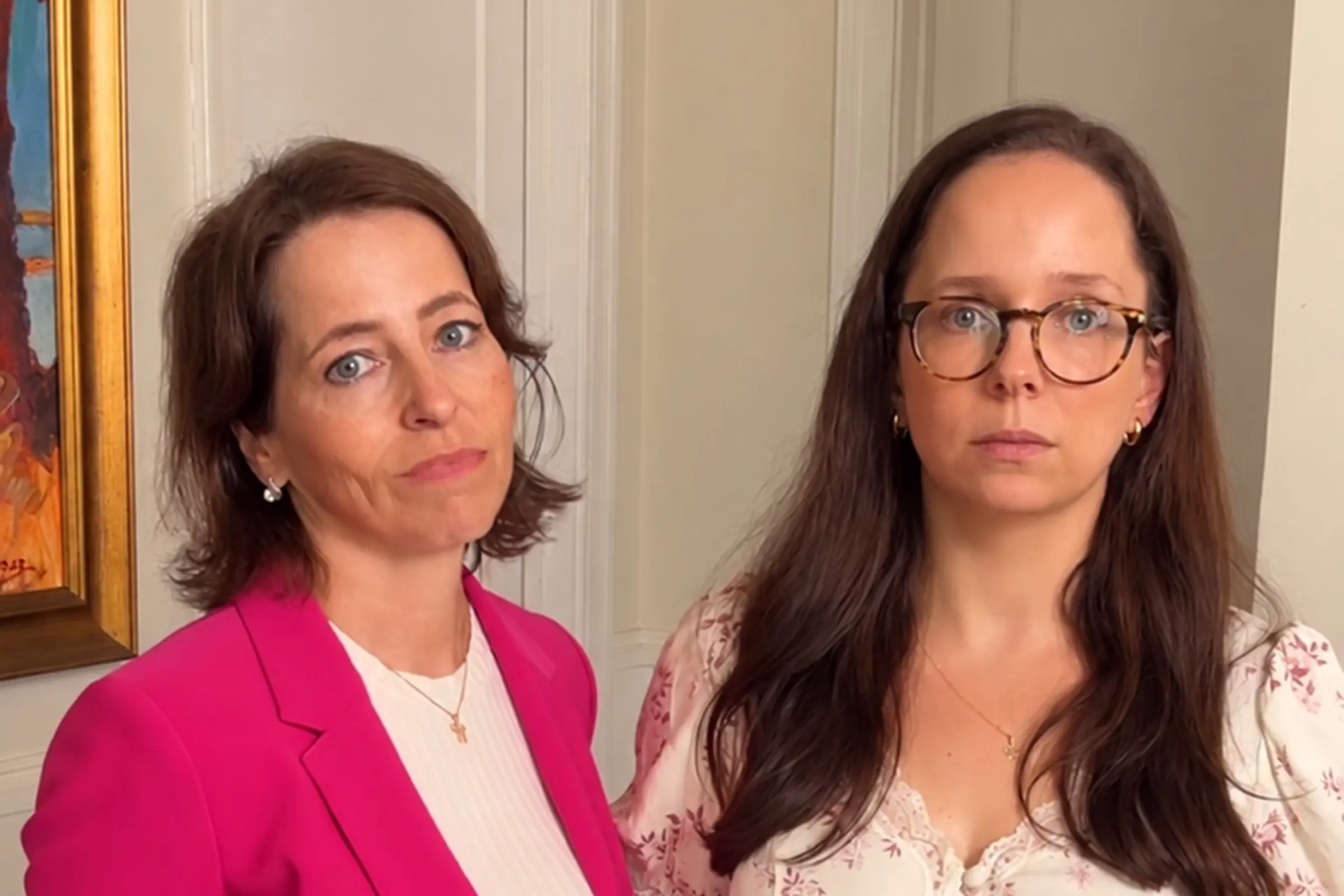
In an Instagram video posted Friday evening, Beverly Hills school-board candidates Jackie Kruger and Kimberly Lifschitz used older school-ranking data to warn voters of fewer opportunities for children and risks to home values. Their appeal omitted the school years behind the latest rankings and recent academic and program gains documented in district records.
The roughly 41-second campaign video opens with the candidates introducing themselves, cuts to a school-ranking chart and a graphic about children's futures and homeowners' finances, then asks residents to elect them November 3. Its central argument is that falling rankings establish a broader deterioration in Beverly Hills schools. The records do not support that sweeping conclusion.
"Remember when Beverly Hills schools were the best in L.A. County?" the video asks. It identifies neither a year nor a measure for that assertion. The chart that follows concerns Beverly Hills High School's position in the Los Angeles metropolitan area. One high school's metropolitan ranking cannot establish a countywide comparison of an entire school district.
"In the last 4 years, Beverly Hills High has fallen 99 spots in the U.S. News L.A. Metro rankings."
That claim appears across the video's captions. Its own chart supplies the correction: No. 75 in 2021 and No. 174 in 2026. The subtraction is 99 places, but the endpoints are five years apart. The graph's 2022 figure is also 75, which would produce a four-year comparison, but it is explicitly marked as an estimate. The highlighted comparison uses 2021.
Three plotted figures, for 2020, 2022 and 2023, carry asterisks. The footnote calls them "Estimated rank." The 2023 figure of 100, immediately before the sharp drop the graphic emphasizes, is therefore an estimate. The chart provides no explanation of how those estimates were calculated.
The timeline also omits the difference between a ranking's publication date and the school year it measures. U.S. News' 2025-2026 announcement identifies 2022-2023 as its data year. Its 2026-2027 announcement identifies 2023-2024. Labeling those releases 2025 and 2026 is legitimate; presenting them as evidence of student performance in those same years is misleading.
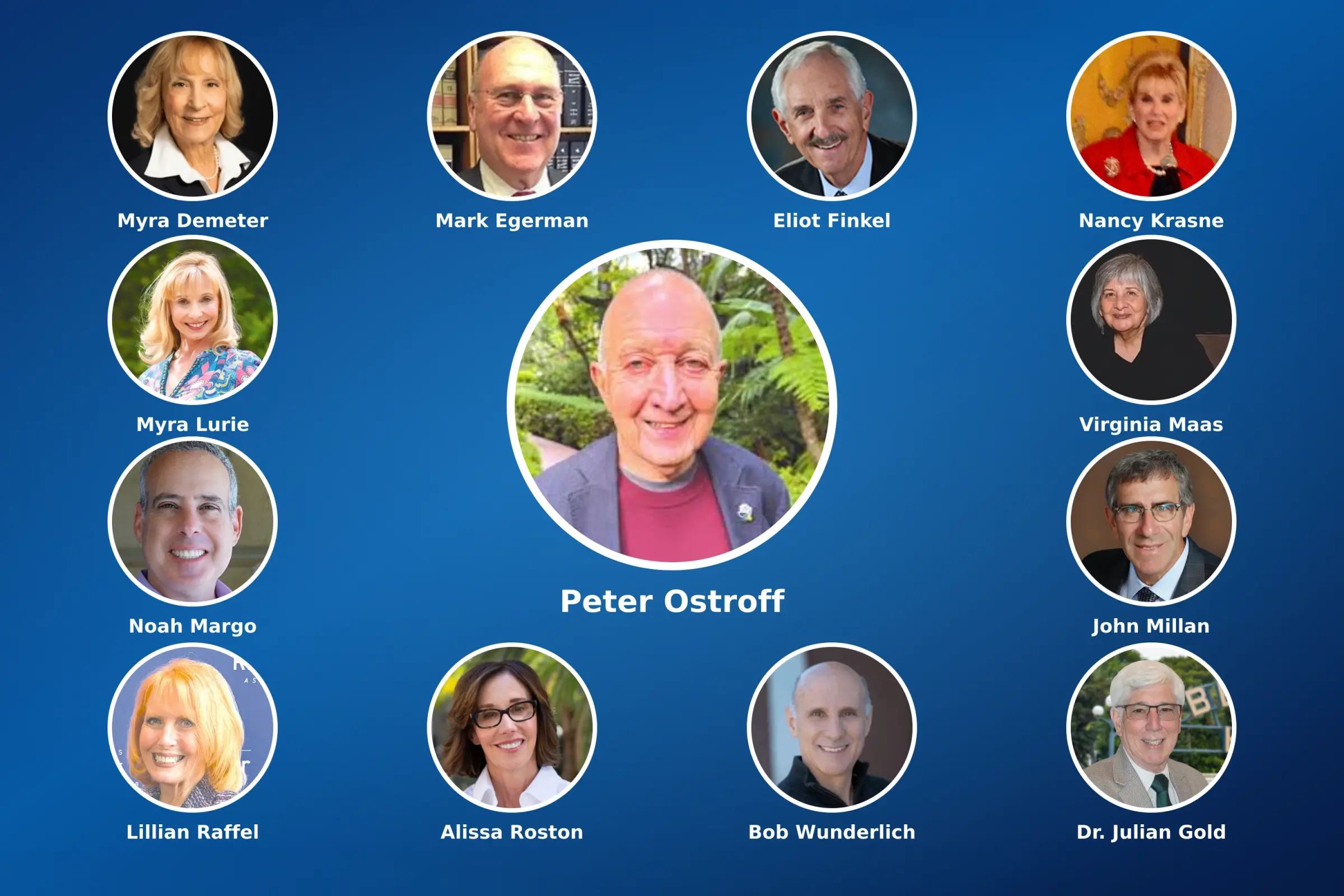
This qualification was available from a source the campaign's own chart names. In his August 27 article, Peter Ostroff acknowledged that the "proficiency exam scores are from the 2023-4 school year." He also reproduced Board President Judith Manouchehri's explanation of the 2025 release's 2022-2023 data.
Ostroff continued to criticize the district and argued that comparative rankings matter. His acknowledgment of the data lag does not mean he withdrew that criticism. It does mean the historical limitation was readily available and should have accompanied the candidates' argument.
More recent academic results complicate the video further. The district's 2026-27 accountability plan lists grade 11 English proficiency at 62% in 2023-24 and 67% in 2024-25, a gain of five percentage points. Math rose from 48% to 52%, four percentage points. These are newer high-school results than the proficiency figures behind the 2026 ranking.
Those gains have limits: English remained below the plan's 2022-23 baseline of 72%, while math exceeded its earlier 43% baseline. Improvement over the latest year does not erase earlier losses or establish how BHHS compares with every neighboring school. It does contradict a portrayal of uninterrupted deterioration.
Separately, BHUSD's June results announcement reported districtwide CAASPP increases of 4% in English, 5% in math and 9% in science. Those are the district's stated figures, covering the district rather than BHHS alone. They should not be substituted for the high school's proficiency rates or treated as a new U.S. News ranking.
"That means fewer opportunities for our kids"
The video makes that assertion without identifying a canceled program, lost course or reduced service. Recent records show substantial opportunities added or restored, including expanded college counseling, career pathways, athletics support and performance spaces.
The district reports that four-year college applications for the Class of 2026 increased 37% over the Class of 2025, and that the percentage of students scoring 3 or higher on AP exams rose from 84% to 88%. More applications do not automatically mean more acceptances, but they are evidence of students pursuing opportunities, not evidence that a lower metropolitan rank has removed them.
Just eight days before the campaign video, BHHS hosted a college fair with representatives from more than 32 institutions and more than 300 students and family members attending, according to the district. The event accompanied an expansion in individualized college counseling.
The accountability plan also records a more complicated course picture than either blanket decline or universal expansion: BHHS electives fell from 99 in 2023-24 to 95 in 2025-26, while pathways increased from 27 to 39. A serious assessment should examine what students can actually access. A ranking alone cannot settle that question.
In athletics, BHUSD announced a five-year Nike and BSN SPORTS agreement beginning July 1, 2025, covering apparel, footwear and equipment across district schools. The announcement describes a supply and branding partnership, not a disclosed cash windfall or a guarantee of wins.
The board also approved Jeff Bailey as head football coach and director of strength and conditioning in February 2026, with responsibility for conditioning across high-school sports. Adam Verdi, a BHHS graduate, led varsity boys' basketball in his first season during 2025-26. These appointments document investment in programs, although their long-term competitive results require continued scrutiny.
Beyond athletics, the district reported that MorTorq robotics reached its first finals in 16 years at the Aerospace Valley event in April, finishing second as part of a three-team alliance. Its July technology policy includes a grades 3-5 program covering coding, robotics, media literacy and artificial intelligence fundamentals. A high-school robotics result is not a districtwide achievement measure, but it is a concrete student opportunity absent from the campaign's narrative.
Media production remains another visible opportunity. KBEV offers hands-on broadcasting and digital production. Filmmaker Kyle Newman leads the broadcast program, as previously reported by the Standard; the district's 2026 fashion-show broadcast credits him alongside student directors, producers and camera operators. Those credits document students doing production work, rather than a future promise.
The facilities record is equally tangible. K.L. Peters Auditorium reopened in January after nine and a half years, with Dance Company students performing. The Grand Lawn reopened May 1. An August campus update also documented the restored Salter Family Theatre, six new tennis courts, a softball field and classroom and performance spaces in Buildings B3 and B4. These projects span years of taxpayer investment and multiple administrations; their completion restores access for students now.
Early childhood services are moving in the same direction. The district's preschool information describes its 2026 partnership with the city and locations at Hawthorne and Horace Mann. The board's September 8 vote set a vision for a broader early childhood center, including younger children and caregiver classes, as the Standard reported. That expansion remains a planning and licensing effort, not a fully opened center whose future services can already be counted as delivered.
"The board has simply fallen asleep at the wheel."
Lifschitz delivers that accusation on camera. Yet the board unanimously approved Alex Cherniss' superintendent agreement in April 2025, and the district announced new elementary principals Kim D'Aloisio at El Rodeo and Steven Suttle at Horace Mann the following month. New leadership alone does not establish success, but those actions and the documented investments deserve examination before a campaign dismisses the board as inactive. Cherniss' appointment also came after the school years underlying both recent rankings.
"and a real risk to our property values."
The video's property warning supplies no Beverly Hills sales analysis connecting the ranking to prices. The available market record points in a different direction: Redfin's city report gives a median sale price of $4,025,000 for the three months ending August 2026, up 34.2% from the comparable period a year earlier.
That median measures the homes sold, not appreciation of every existing home. Changes in the mix of luxury sales can move it sharply, and it cannot prove that schools caused the increase. It nevertheless provides local evidence the candidates' warning omits. A forecast of risk is not disproved by one rising median, but it remains unsupported by the evidence offered in their video.
Tax records require another distinction. An August 11 city finance report lists assessed valuations rising from $48.59 billion in 2025-26 to $50.77 billion in 2026-27, approximately 4.5%. It proposed a modest increase in the city's public-safety pension tax override, from $0.043230 to $0.043844 per $100 of assessed value. That city levy is not a school-performance measure or the entire property-tax bill.
The county assessor's July announcement says the 2026 roll applied the maximum 2% Proposition 13 inflation adjustment to eligible assessments. Sales, new construction and assessment rules can raise taxable values and bills without measuring the market price of an unchanged home. Higher taxes cannot be used as proof that schools caused property appreciation, any more than a school-ranking chart proves they caused a property threat.
Kruger promises on camera that "we'll be laser focused on bringing those rankings back up." The video supplies no specific policy, cost or timetable for that promise. It closes with Lifschitz's appeal: "On November 3rd, let's put Beverly Hills back on top."
The candidates are entitled to challenge the district's record. That record includes earlier academic losses, remaining proficiency gaps and measures that have not improved. But their video compresses the ranking timeline, omits the age of the data and presents broad consequences without evidence connecting them to the rankings. Expanded counseling, restored facilities and newer academic gains do not disappear because they complicate a campaign message.
With vote-by-mail ballots scheduled to begin mailing no later than October 5, voters are already making decisions. Kruger and Lifschitz's appeal asks them to accept a narrative of decline while leaving out substantial parts of the public record. Candidates seeking authority over children's education owe those families a complete account.


Join the Conversation
Comments are available exclusively for registered subscribers. Sign up to read comments and share your thoughts on this article.
Get access to exclusive content, breaking news, and community discussions.