


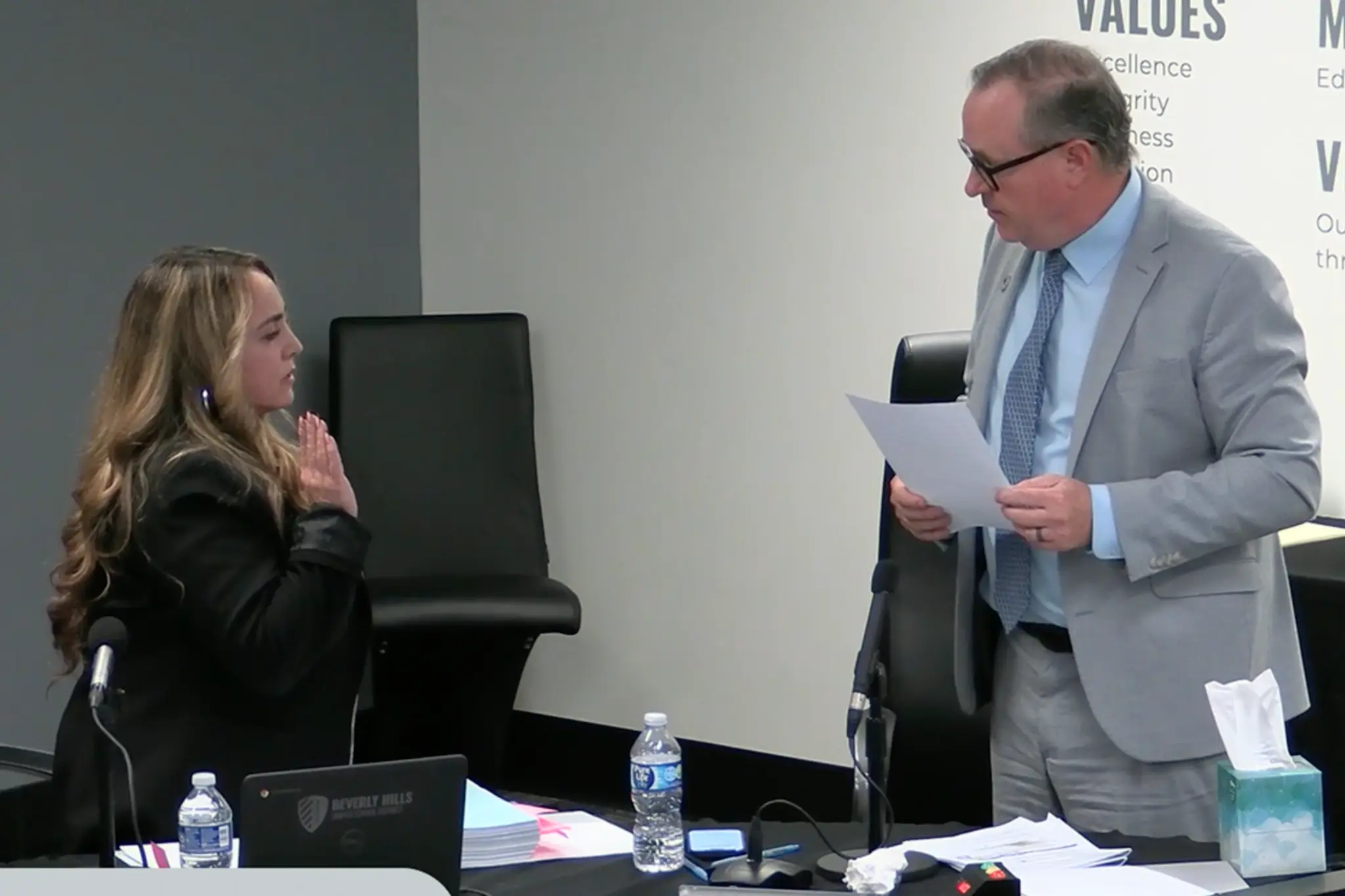
The events surrounding the Beverly Hills Unified School District Board of Education’s vice president position in January 2026 have been widely mischaracterized by several local publications. What occurred was not a discretionary reshuffling of board leadership, nor a political rebuke of any individual. It was a corrective action taken following a Brown Act violation identified through an independent legal investigation.
At the Board’s January 27, 2026 meeting, district legal counsel from BBK appeared via Zoom and advised the Board that an independent investigation had determined that a Brown Act violation occurred in connection with the earlier vice president selection process. Counsel explained that the violation involved a serial meeting related to the election and outlined the cure-and-correct procedure available under the Brown Act.
The statement, read aloud by Board President Judy Manoucheri, placed the legal determination and recommended corrective action squarely on the record. It also made clear that the purpose of the process was procedural compliance, not personal attribution.
During the same discussion, counsel confirmed that the recommended remedy was based on the findings of the investigation and that the serial meeting constituted a Brown Act violation tied to the vice president election.
Superintendent Dr. Alex Cherniss addressed district counsel directly to clarify the basis for the recommended corrective action and District counsel further reiterated that the reconsideration of the vote was the appropriate cure under the Brown Act for a serial meeting violation.
Following counsel’s recommendation, the Board voted to reconsider and nullify the previous vice president election as part of the cure-and-correct process. The Board then amended its bylaws, replacing the prior rotation-based system with an election-based process.
 BHUSD Board of Education Vice President Sigalie Sabag during the January 27, 2026 Board meeting
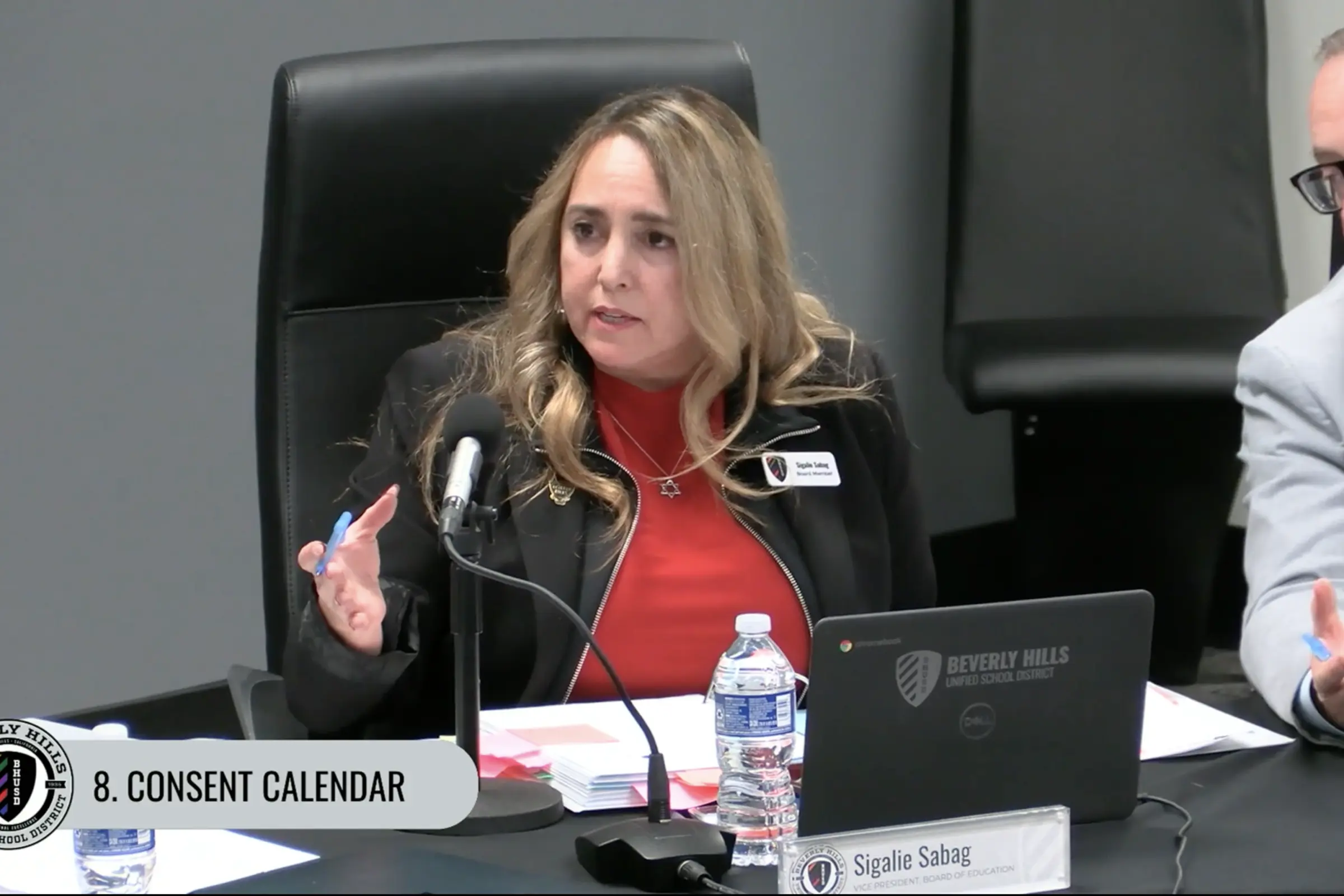
Once the bylaws were amended and the procedural issue addressed, the Board conducted a new vice president election. Under the revised process, Board Member Sigalie Sabag was reelected as vice president.
This sequence of events matters because several local media outlets have framed the outcome as a discretionary decision by the Board or as a political maneuver involving Dr. Stern’s prior consideration for the role. That framing omits the legal context presented on the record, including counsel’s investigation and the recommended cure under the Brown Act.
Characterizing the outcome as merely a board preference overlooks the procedural basis for the reconsideration. The original election was revisited due to a confirmed open-meeting law violation, and the subsequent election occurred only after the Board corrected its procedures and bylaws in open session.
Public trust in school governance depends on accuracy, particularly when reporting on compliance with transparency laws like the Brown Act. When the legal basis for corrective action is minimized or omitted, the public is left with an incomplete understanding of how and why decisions are made.
The record from the January 27, 2026 meeting reflects that an independent investigation identified a Brown Act violation, district counsel recommended a cure through reconsideration of the vote, and the Board followed that recommendation by amending its bylaws and conducting a new election. Any reporting that presents the outcome without this context does not fully reflect the proceedings as they occurred on the record.



Join the Conversation
Comments are available exclusively for registered subscribers. Sign up to read comments and share your thoughts on this article.
Get access to exclusive content, breaking news, and community discussions.