


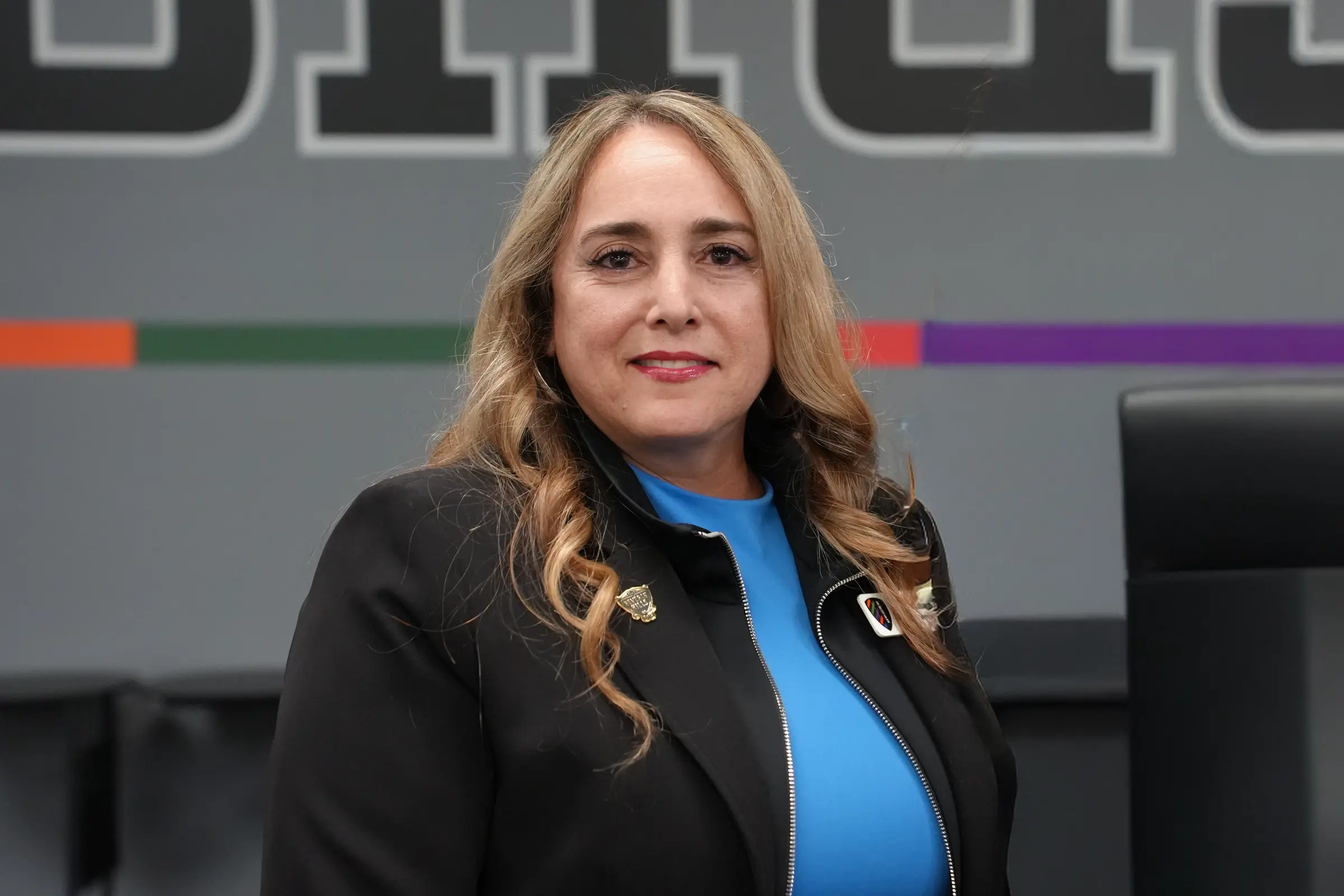
The Beverly Hills Unified School District board chose Sigalie Sabag as its new vice president during the annual organizational meeting on Dec. 16, opting for a member whose brief tenure has already marked advances in academic accountability and community safety.
The decision came after a 3-2 vote rejected the nomination of Dr. Amanda Stern for the role, despite her receiving the highest vote total in the 2024 election. Board members Judy Manouchehri, Russell Stuart, and Sabag supported the change, while outgoing President Rachelle Marcus and Stern opposed it.
Newly installed President Judy Manouchehri explained the choice in direct terms to Stern.
Sabag, who earned strong voter support in her 2024 debut with 6,681 votes, has quickly emerged as a proactive voice on the board. She played a key role in backing the appointment of Superintendent Dr. Alex Cherniss, praising his clarity and alignment with community standards. Sabag has also championed efforts to combat antisemitism, supporting a district resolution that highlighted Jewish contributions and Holocaust remembrance amid rising threats. Additionally, she authored and advanced the Standards-Based Instructional Environment policy to prioritize curriculum-focused teaching and protect students from non-instructional influences, while proposing amendments to strengthen oversight of school construction bonds, ensuring fiscal responsibility.
In her swearing-in remarks as president, Manouchehri highlighted district progress under the current board's direction, including administrative changes, extended kindergarten hours, new tutoring programs, a Spanish immersion initiative, revamped counseling services, flag football teams, and facility expansions such as tennis courts and a performing arts wing.
The shift reflects a board emphasis on proven governance qualities for leadership posts, positioning Sabag, a parent and construction professional committed to elevating academic excellence, to help guide the district forward.
Dr. Amanda Stern, in her closing remarks, appeared to acknowledge that the outcome was foreseeable while expressing frustration over the process.
Stern went on to defend her conduct and question the vote's legitimacy.
“I continue to want to work on this board very much, but I’m not at all surprised,” she said. “It’s shocking too because the bylaws say that if you got the most votes, and that would be me, and you have the longest term, then that is the person who becomes the vice president.”
She also rejected claims of improper media contact.
“Please don’t assume that I go around and gossip or divulge information, because it simply isn’t true,” Stern added.
Stern's reference to a prior assurance of support from a colleague also underscored her view that officer positions require an actual vote, aligning with California Education Code requirements for annual elections of board officers, raising questions about whether a strict rotational bylaw could override the need for democratic confirmation by the full board.
Yet there is historical precedence that passed BHUSD boards have interpreted bylaws in different ways. A similar bylaw dispute occurred during the Beverly Hills Unified School District Board of Education organizational meeting on December 5, 2017.
Yet a Dec 5,2017 organizational meeting provides historical precedent in BHUSD, where the board interpreted the same rotational bylaw flexibly, electing Noah Margo as vice president over Isabel Hacker despite differing views on service length and vote totals, to prioritize what members saw as the best leadership alignment.
Citing a December 7, 2017, article in the Beverly Hills Weekly titled "Korbatov Selected Board President Despite Repeated Absences," Lisa Korbatov was unanimously elected president, but the vice presidency sparked division. Board members Korbatov and Howard Goldstein nominated Noah Margo, citing a rotational precedent based on overall service length (ignoring breaks in service). Isabel Hacker, the top vote-getter in the 2015 election and arguably next in line under a strict reading, argued the full board had never formally discussed or agreed on that interpretation.
The election of Margo proceeded despite the objections, mirroring debates over whether officer roles follow automatic rotation or allow discretion based on governance considerations. No 3-2 vote was reported; the article notes abstentions rather than opposition votes.



Join the Conversation
Comments are available exclusively for registered subscribers. Sign up to read comments and share your thoughts on this article.
Get access to exclusive content, breaking news, and community discussions.