


For too long, a small circle of insiders with privileged access to district administrators and educators exercised disproportionate influence over district decisions, while many parents, teachers and families felt unheard. The election of new leadership reflected the community's desire for greater accountability, fiscal responsibility, transparency and a renewed focus on students.
That is not dysfunction. It is democracy.
Disagreement and independent thinking are essential to good governance. A school board member's responsibility is not to preserve the status quo or satisfy longtime insiders, but to represent all students, parents, taxpayers and educators.
Peter Ostroff's recent opinion piece in the Beverly Hills Weekly focuses heavily on personalities, litigation and political narratives while overlooking the fundamental purpose of a school board: improving educational outcomes for students.
Readers should also consider the perspective from which the piece was written. Mr. Ostroff is not a current BHUSD parent, while many families in the district have experienced firsthand the challenges facing our schools. We have volunteered, attended meetings, engaged with educators and advocated for improvements because our children are directly affected by Board decisions.
Equally concerning is Mr. Ostroff's decision, as a lawyer, to publicly discuss settlement negotiations summarized for him by Mr. Lifschitz, another lawyer. California has long recognized the importance of encouraging candid settlement discussions without fear that those communications will later be used to influence public opinion.
The disclosure of settlement negotiations appears inconsistent with, and undermines, the policies reflected in California Evidence Code Section 1152 and California Rule of Professional Conduct 3.6. Rather than advancing a productive discussion, introducing settlement matters into an opinion piece politicizes legal issues that should remain outside the court of public opinion.
Mr. Ostroff's commentary also reflects a level of personal involvement that raises questions about objectivity. His article presents only the version of events provided to him while omitting important context, including that Trustee Stern's representatives initiated settlement discussions not once, not twice, but three times. A complete public discussion requires more than a selective presentation of facts.
Instead of examining why a majority of the Board concluded that Trustee Stern was not the right person to lead the Board, Mr. Ostroff's piece focuses on personal criticism and political conflict. The continuing public commentary involving Lifschitz, Ostroff and Stern appears designed to keep this controversy alive rather than allowing the district to focus on its educational mission.
Good governance requires thoughtful deliberation, transparency and service to students, not ongoing political theater.
Good governance is also inconsistent with tactics that discourage participation through intimidation or, as many members of the community have described it, by "yelling people out of the room." Public institutions function best when differing viewpoints can be expressed respectfully and community members feel welcome participating in the process.
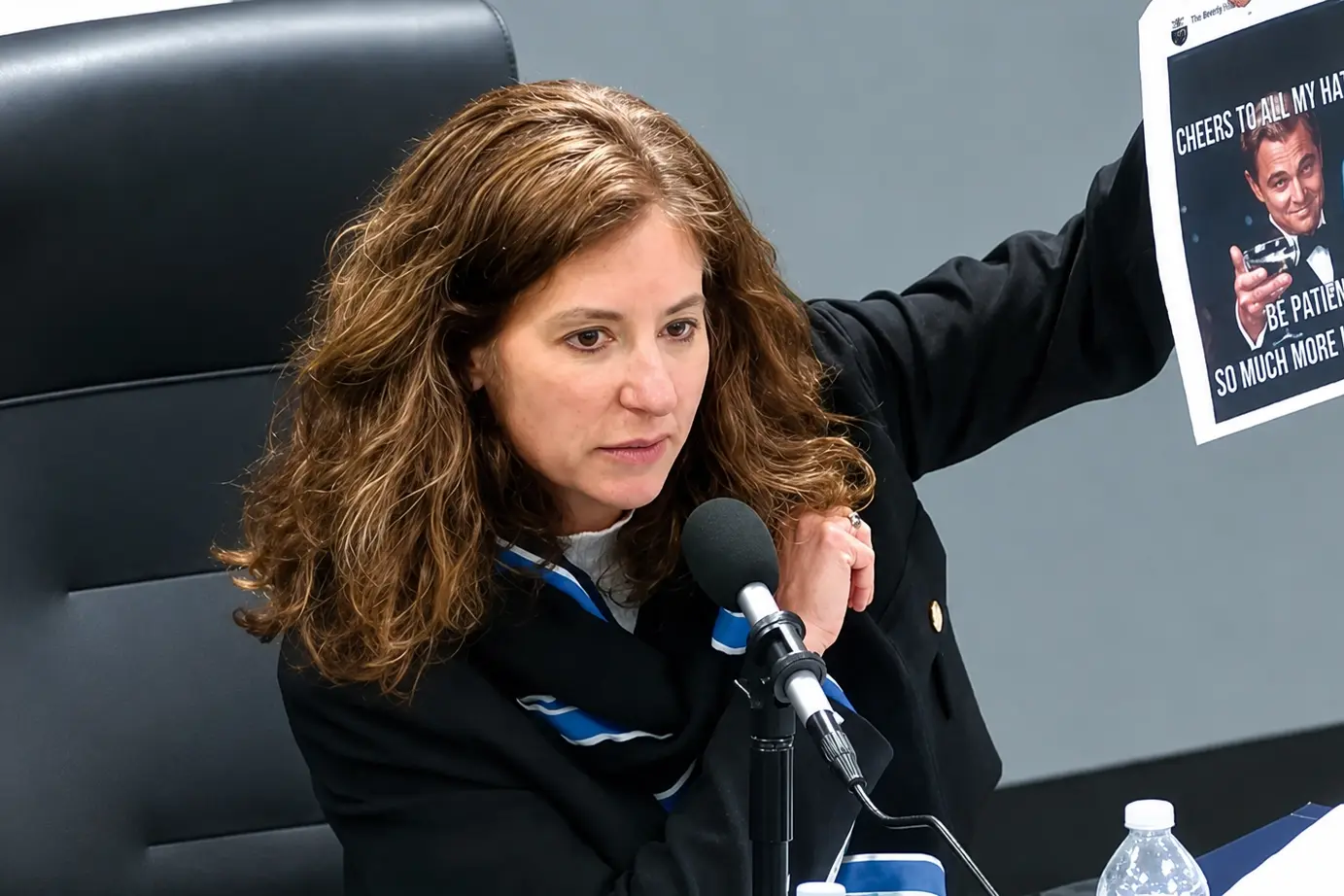
Judy Manouchehri did not seek office to preserve the way things were. She ran because parents wanted leaders willing to ask difficult questions, demand accountability, improve transparency, strengthen fiscal oversight and put students first.
Since taking office, her focus has been on restoring trust, improving communication, supporting academic excellence and ensuring that decisions are made with students, not politics, as the priority.
Serving on a Board of Education requires significant commitment and personal sacrifice. Most board members devote countless hours to reviewing agendas, attending meetings, visiting campuses, meeting with parents and staff, and making difficult decisions that affect thousands of students.
Reasonable people may disagree with individual decisions, but questioning the motives of those who volunteer their time to improve public education does not advance meaningful dialogue.
Ultimately, voters should judge school board members by their leadership, integrity and results, not by opinion pieces designed to elevate preferred interests or diminish those who challenge the status quo.
The conversation should remain where it belongs: on what is best for the students of Beverly Hills. Judy Manouchehri's record speaks for itself, and that record, not political rhetoric or personal grievances, deserves the community's attention.


Join the Conversation
Comments are available exclusively for registered subscribers. Sign up to read comments and share your thoughts on this article.
Get access to exclusive content, breaking news, and community discussions.