


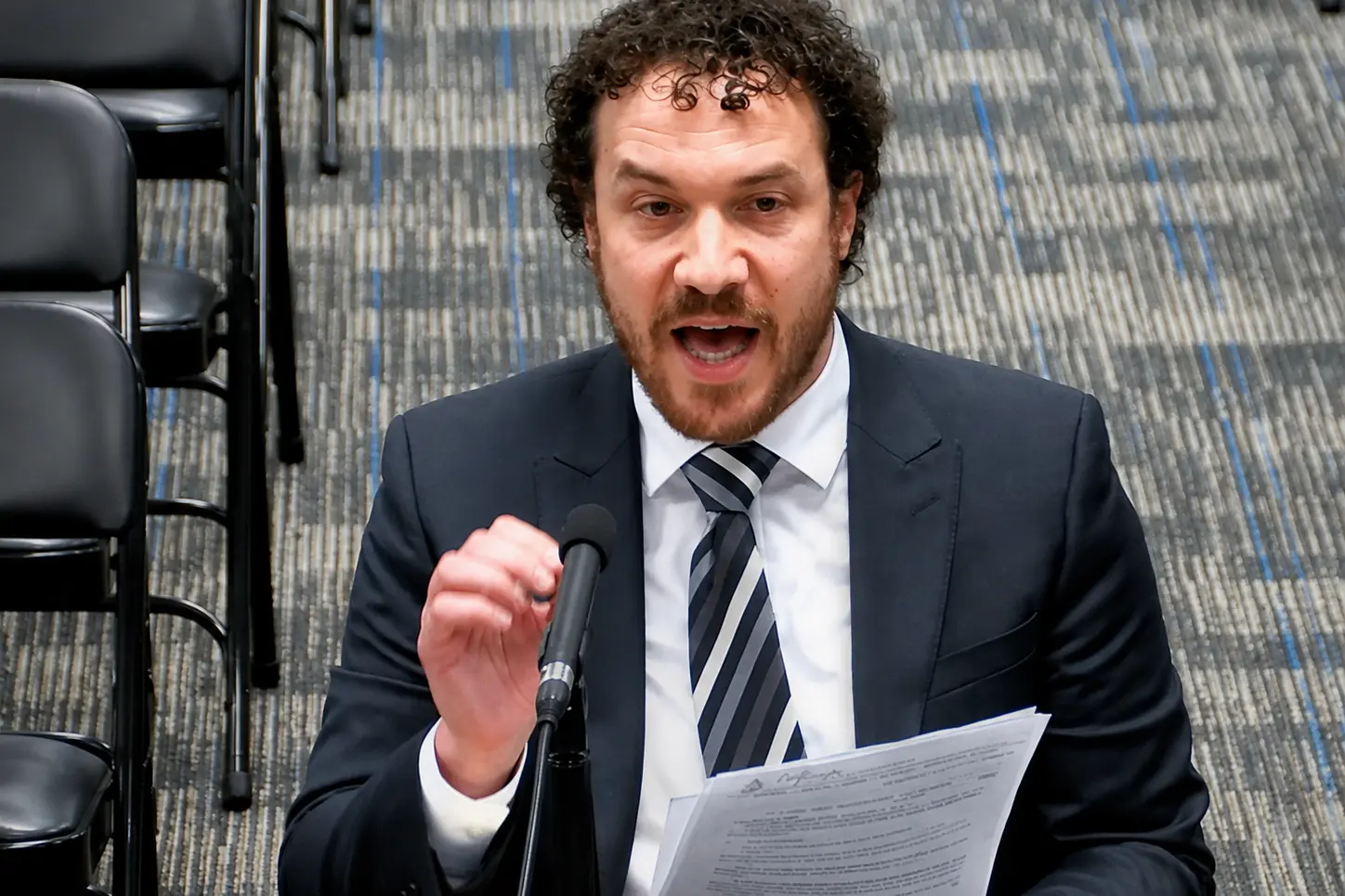
A Los Angeles Superior Court judge has denied an emergency application filed by Daniel Lifschitz against the Beverly Hills Unified School District and three members of its Board of Education, finding that he failed to demonstrate the extraordinary circumstances required for immediate ex parte relief.
In a written order issued Aug. 7, Judge Tiana J. Murillo concluded that Lifschitz had not made the factual showing necessary to justify emergency judicial intervention.
"The moving party has failed to make an affirmative factual showing of irreparable harm, immediate danger, or any other statutory basis for granting relief ex parte."
The ruling represents a significant procedural setback for Lifschitz's latest effort to obtain immediate court intervention in the ongoing discovery dispute arising from his writ petition against BHUSD and Board members Judith Manouchehri, Sigalie Sabag and Russell Stuart.
Lifschitz filed his emergency application on Aug. 6, alleging that respondents had failed to comply with the court's July 21 discovery order and asking the court to intervene immediately.
Among other allegations, Lifschitz placed his account of disputes arising during the Aug. 4 deposition of Board President Judith Manouchehri into the public court record. He alleged that Manouchehri concluded the deposition after approximately four hours and cited portions of her deposition testimony in support of his demand for emergency relief.
Those assertions represented Lifschitz's position in the litigation. Judge Murillo did not find in Friday's order that Manouchehri violated the July 21 discovery order by ending the deposition, nor did the court conclude that the conduct alleged by Lifschitz justified emergency judicial intervention.
Instead, the court denied Lifschitz's request for ex parte relief altogether.
"The matters raised in the ex parte application do not warrant ex parte treatment under CRC, rules 3.1200 et seq."
The distinction is significant. Lifschitz had presented the discovery disputes as sufficiently urgent to require immediate action by the court. Murillo found that the circumstances presented in his application did not meet that standard.
The court made clear that Lifschitz remains free to pursue available discovery remedies, but directed him to do so through established procedures rather than through the emergency intervention he sought this week.
"Petitioner may pursue any available remedies through a properly noticed motion and shall continue diligently pursuing discovery within the existing framework of the Court's July 21, 2026, order."
Murillo then directly rejected the premise that disputed discovery issues arising in a writ proceeding automatically justify immediate judicial intervention.
"Nothing about a writ proceeding converts routine or disputed discovery issues into emergencies requiring immediate ex parte intervention."
That language strikes at the heart of Lifschitz's application. He asked the court to step into active discovery disputes on an emergency basis. Rather than treating those disagreements as an emergency, Murillo characterized them as "routine or disputed discovery issues" and directed the parties back into the court's established discovery framework.
The judge followed that finding with the strongest language in Friday's order, drawing a clear boundary around the role of the court during depositions and other ongoing discovery proceedings.
"Counsel are also reminded that the Court is a shared public resource, not a private discovery referee, and there is no recognized procedure by which parties may seek on call judicial intervention during depositions or other ongoing discovery activity."
The language marked a direct rejection of the emergency procedure Lifschitz attempted to invoke following the deposition disputes. Lifschitz sought immediate court intervention. Instead, Murillo found that he had not demonstrated the factual basis necessary for such relief and ordered the parties back into a structured discovery process.
Rather than granting Lifschitz's request, Murillo acted on the court's own motion to establish a process for resolving any remaining discovery disagreements.
The court scheduled a discovery conference for Aug. 19 at 10:00 a.m. in Department 834 of the Stanley Mosk Courthouse. Remote appearances will be permitted.
Before that conference, counsel for all parties are ordered to meet and confer by telephone, videoconference or in person and make a reasonable and good-faith effort to resolve each discovery issue that remains in dispute.
No later than three court days before the conference, the parties must file a single joint statement of no more than seven pages. The statement must identify each unresolved discovery dispute, explain the necessity of the discovery being sought and set out the basis for any objection or withholding of information.
Murillo also expressly prohibited the parties from turning that filing into another round of motion practice or advocacy.
"The joint statement shall not be styled as a motion, nor used as an opportunity for argument, briefing, or evidentiary presentation. It is intended solely to assist the Court in efficiently addressing any remaining discovery issues at the conference."
The underlying writ petition challenging actions of the Beverly Hills Unified School District Board of Education remains pending, and Friday's ruling does not resolve the ultimate merits of that case. Nor does the order modify or vacate the court's July 21 discovery order.
What Friday's ruling does resolve is the specific question Lifschitz placed before the court this week: whether the discovery disputes and allegations described in his Aug. 6 application justified immediate emergency intervention.
The court's answer was no.
After reviewing Lifschitz's filing, Murillo denied the application without oral argument, finding that he failed to establish irreparable harm, immediate danger or another statutory basis for ex parte relief. She further rejected the notion that routine or disputed discovery matters entitled the parties to "on call judicial intervention" during depositions and reminded counsel that the court is "not a private discovery referee."
The case will now proceed within the court's existing discovery framework. The parties have been ordered to meet and confer before the Aug. 19 discovery conference, where any remaining disputes can be addressed through the process established by Judge Murillo.



Join the Conversation
Comments are available exclusively for registered subscribers. Sign up to read comments and share your thoughts on this article.
Get access to exclusive content, breaking news, and community discussions.